Yokohama Solo: The Waterfront Walk and a ¥3,600 Capsule
Updated October 30, 2026 · Prices checked October 30, 2026 · Visited November 2024, March 2025
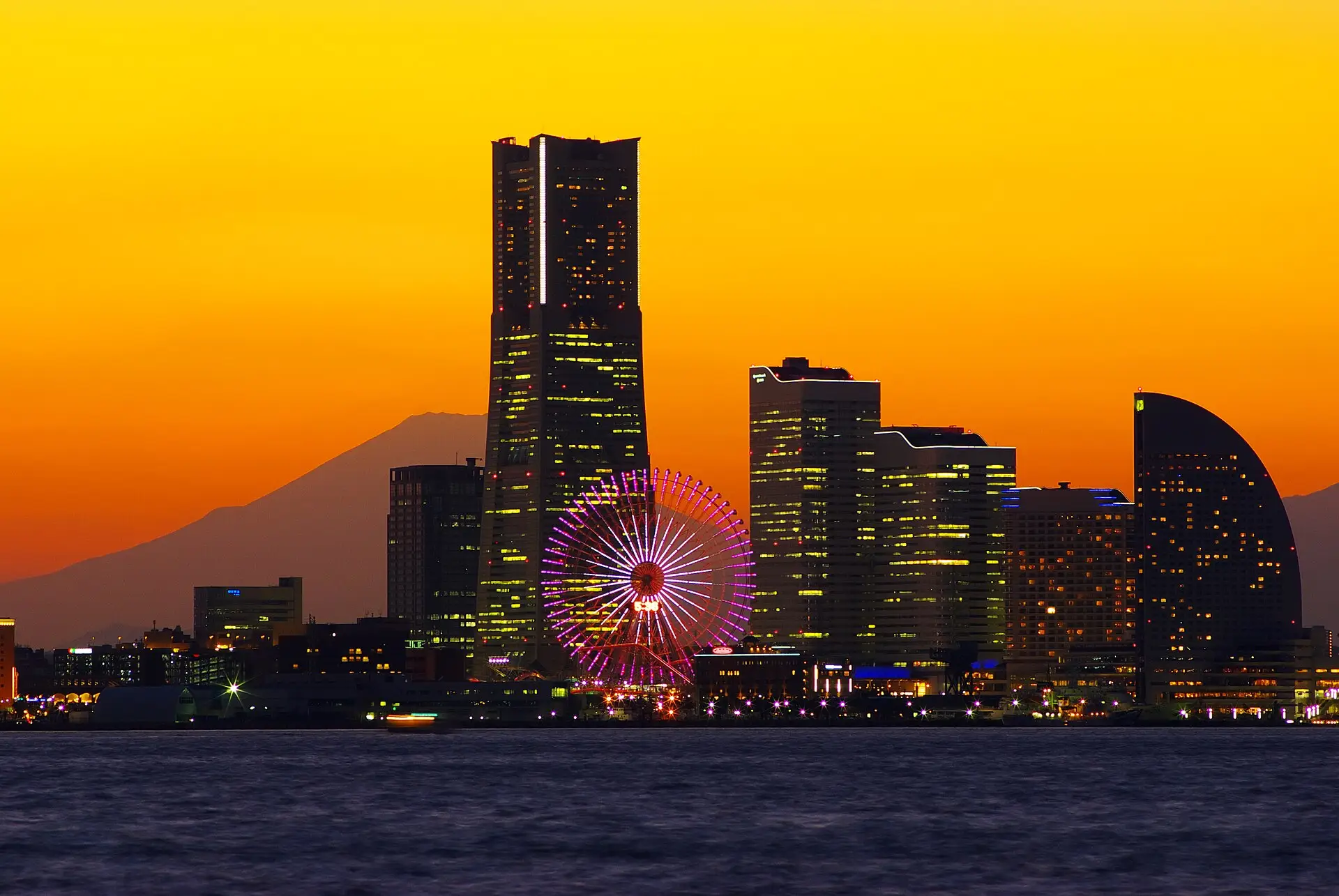
Minato Mirai at sunset, with Mt. Fuji behind Photo: 名古屋太郎・CC BY-SA 3.0
I have been to Yokohama six or seven times, almost always on my own, and stayed overnight twice: in November 2024 and March 2025. I walk much the same route every time, so there is plenty in Yokohama that is not here. This is the route I keep coming back to and what I noticed on it.
Anything that is not my own memory, like fares, hotel facilities or opening hours, comes from official pages or booking sites, with the date I checked it.
Getting there from Tokyo
I take one of two trains, both JR and both with no change:
- From Tokyo Station, the JR Tokaido Line: about 27 minutes. ¥530 with a paper ticket, ¥528 with a Suica or other IC card.
- From Akihabara, the JR Keihin-Tohoku Line straight through: ¥620 with a ticket, ¥616 with an IC card.
Those are the fares after JR East’s increase of March 14, 2026. The Japan Rail Pass covers both trains in the standard cars. The Tokaido Line also has Green Cars (first class), which the pass does not cover on rapid and local trains.
For the last train back, see direct trains back to Tokyo.
Yokohama Station: for eating and drinking
When you step out at Yokohama Station, you are in an ordinary busy commercial district: restaurants and bars, block after block. The station area is not a sight in itself.
It is, though, where I go when I want a drink or a bowl of ramen. For drinking I go to cheap chain izakaya (Japanese pubs), such as Shin-Jidai.
To get to the sea from here, walk, take a taxi, or ride the train to Kannai. By my memory it is about a 30-minute walk to the waterfront, or about 10 minutes by taxi.
The walk: from Kannai to the waterfront
At Kannai Station you start seeing posters for the Yokohama DeNA BayStars, the city’s baseball team. Walk out of the station and the sea is right there.
This is the Yokohama everyone pictures: the Red Brick Warehouse, Zou-no-Hana Park on the water, and Osanbashi, the pier that juts out into the harbor.
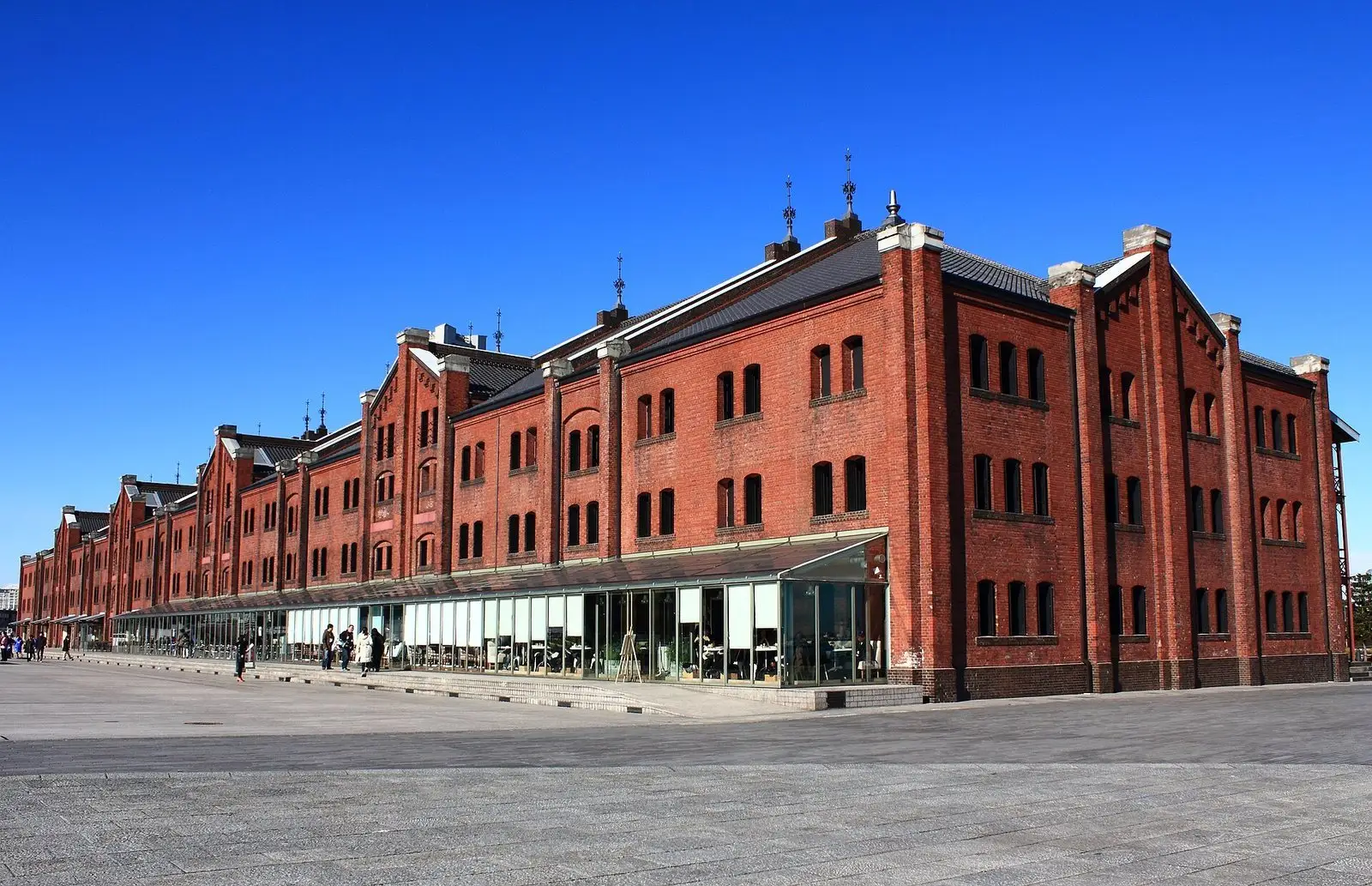
The Red Brick Warehouse: two warehouses built over a century ago, now shops, cafes and an event space. How to get to Yokohama Red Brick Warehouse →
Photo: Kakidai・CC BY-SA 3.0
Honestly, for me this is the main event. Every visit, I walk back and forth around the Red Brick Warehouse and Osanbashi, take in the sea air, and that is my day made.
- Osanbashi is a cruise-ship terminal, and its rooftop is a free plaza open 24 hours (Osanbashi official).
- It is a 15-minute walk from Kannai Station (Osanbashi official).
Nearby there is an amusement park, Yokohama Cosmo World, and a huge hotel, and the views from around there are lovely. There is also the Yokohama Anpanman Children’s Museum.
What I like is how compact it all is: the sights are close enough together that walking between them is no effort.
Eating: Szechuan in Chinatown
If food is the reason for the trip, go to the station area or to Chinatown.
I have been to Chinatown about three times. Once I find a place I like, I keep going back, and in Chinatown that place is Keitokuchin, a Szechuan restaurant. I think it is the main branch I go to.
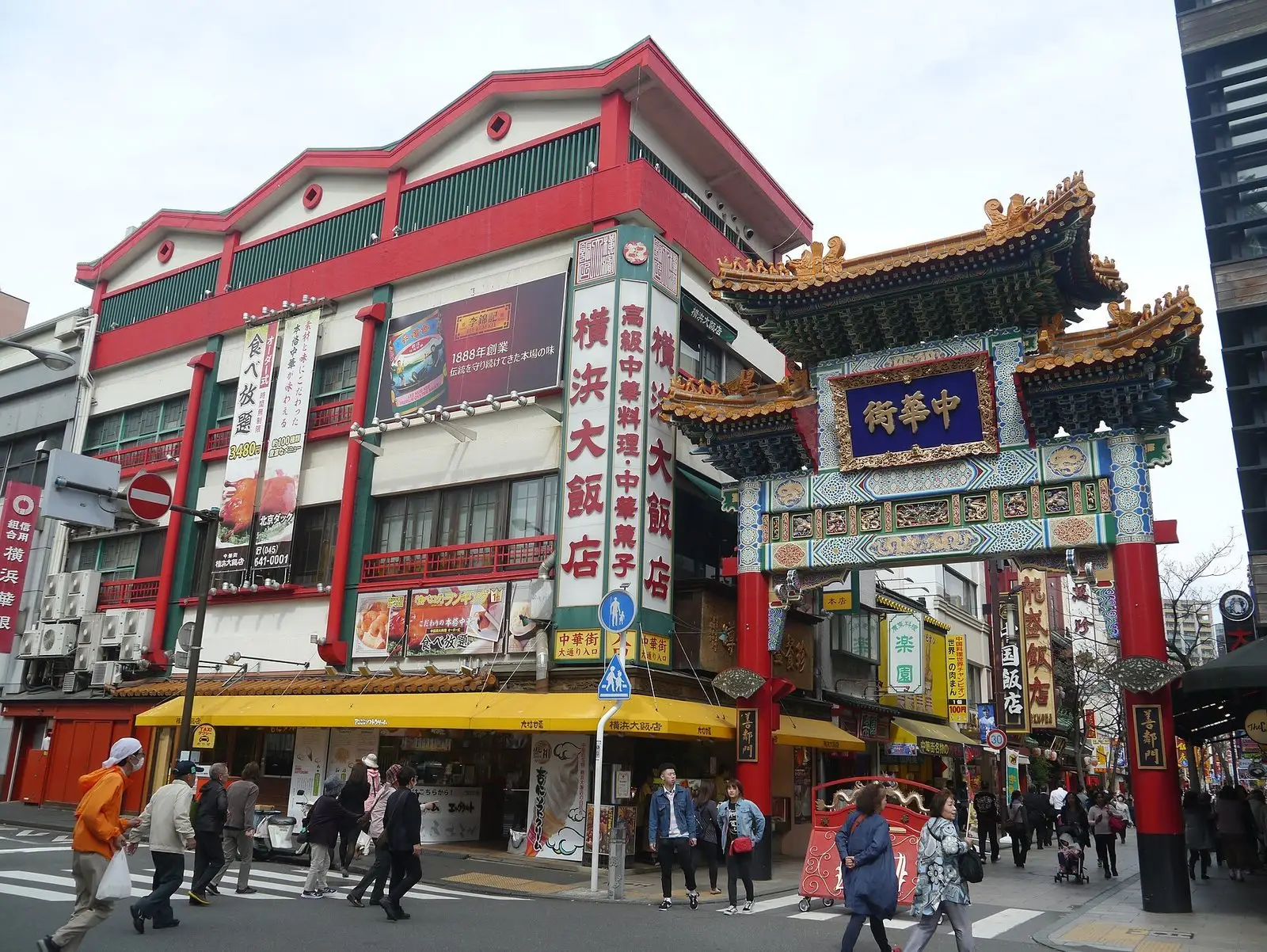
Yokohama Chinatown: about 500 m across, packed with restaurants and shops. How to get to Yokohama Chinatown →
Photo: Zairon・CC BY-SA 4.0
It is a little upscale, but the portions are huge: on my own, two dishes is plenty. With a group, it becomes very good value.
I usually order a shellfish dish and the boiled white fish, a Szechuan dish of fish in a chili broth. It is seriously spicy. Sometimes I add zha cai (pickled mustard root) or another seafood dish. The spicy food is genuinely delicious and properly hot; I think it is one of the best restaurants in Chinatown.
- Address: 190 Yamashitacho, Naka-ku, on Ichiba-dori street
- Hours: 11:30 am to 10 pm on weekdays, 11 am to 10 pm on weekends and holidays (last orders 9:30 pm), open every day (Yokohama Chinatown official, updated June 2026)
- Chinatown also has a “Keitokuchin Shinkan” and a “Keitokuchin Shuka”; the restaurant’s own site says they are run by separate companies. It also says the main branch will move to Chinatown’s main street in early February 2028 (Keitokuchin official).
See photos and the map on Google Maps
Where I stayed: two capsule hotels for about ¥3,600
Both times I booked a capsule hotel on Agoda. A capsule hotel rents you a sleeping pod instead of a room, with shared bathrooms. The first is on the Yokohama Station side, the second on the Kannai side.
Capsule Plus Yokohama (November 2024)
I paid ¥3,600 including tax and service, plus the local accommodation tax.
- Address: 2-1-5 Kitasaiwai, Nishi-ku, a 5-minute walk from the west exit of JR Yokohama Station
- Rooms: capsules with showers on separate floors for men and women, including women-only capsules. The large bath and the sauna are for men only
- Source: the hotel’s listing on Rakuten Travel (checked October 30, 2026)
See photos and the map on Google Maps
Tabist MAYUDAMA CABIN (March 2025)
I paid ¥3,629 including tax and service, plus the local accommodation tax.
- Address: 1-4-6 Furocho, Naka-ku, a 1-minute walk from Kannai Station
- Rooms: a capsule hotel with a women-only second floor and a men-only third floor; shared showers and toilets, and a cafe on the ground floor
- Source: the hotel’s listing on Rakuten Travel (checked October 30, 2026)
See photos and the map on Google Maps
Prices change with the season, so check when you book.
Who you will meet
A warning about the Red Brick Warehouse: alone, it hurts a little. It is full of couples. I would guess about six in ten of the people I could see were couples.
That said, there are plenty of places to eat inside the warehouse buildings.
The day I want to do next: baseball
Yokohama packs a lot into a small area. You can go for the food or for the views; there is an amusement park, and you can just sit and look at the sea, which is a rare thing in a city trip. You can even catch a baseball game, because the BayStars play here.
I have not done this yet, but it is the most beautiful day I can imagine here, and it is next on my list:
- Watch a day game.
- When it ends, around 5 pm, have dinner in Chinatown.
- Then walk, for as long as you like.
- Spend the rest of the night in the izakaya around Yokohama Station.
- Drink until morning, or head back to your hotel.
Yokohama Stadium, the BayStars’ home ground, is in Yokohama Park, a 2-minute walk from JR Kannai Station (Yokohama DeNA BayStars official). Check the official schedule for game days and start times.
Who I would send here
- Anyone who loves a seaside walk
- Anyone going for the food
- Baseball fans
Before you go
- Keitokuchin’s hours (the main branch moves in February 2028)
- Your hotel’s price and room type; at Capsule Plus Yokohama the bath and sauna are men-only
- The last train back: see direct trains back to Tokyo
- For baseball, the BayStars’ game schedule
The Yokohama guide has more sights, day passes and where to stay.
FAQ
Should I get off at Yokohama Station or Kannai Station?
For the waterfront, Kannai. Walk out of the station and the sea is right there. Yokohama Station is a busy commercial area, better for drinks and ramen. From Yokohama Station to the waterfront was about a 30-minute walk for me, or about 10 minutes by taxi.
Is Yokohama good for solo travelers?
Yes. I have been six or seven times, almost always alone, and the waterfront walk is very satisfying on your own. The Red Brick Warehouse is full of couples, though, so it can feel a little lonely.
Where can I stay cheaply in Yokohama?
I stayed in two capsule hotels, each about ¥3,600 a night including tax (plus the local accommodation tax): Capsule Plus Yokohama near Yokohama Station and Tabist MAYUDAMA CABIN, a minute from Kannai Station. Both take women as well as men, on separate floors. Prices vary by season.
Does the Japan Rail Pass cover Tokyo to Yokohama?
Yes. The JR Tokaido Line from Tokyo Station and the JR Keihin-Tohoku Line from Akihabara are both covered in the standard cars. The pass does not cover Green Car seats on these trains, or private lines such as the Minatomirai Line.
Sources
- Tokyo to Yokohama fare: Travel Watch, reporting JR East’s approved fares (checked October 30, 2026)
- Akihabara to Yokohama fare: Ekitan (checked October 30, 2026)
- Osanbashi official: access and FAQ (checked October 24, 2026)
- Yokohama Chinatown official: Keitokuchin (checked October 30, 2026)
- Keitokuchin official: the other two restaurants and the planned move (checked October 30, 2026)
- Rakuten Travel: Capsule Plus Yokohama and Tabist MAYUDAMA CABIN (checked October 30, 2026)
- Yokohama DeNA BayStars official: access to Yokohama Stadium (checked October 30, 2026)
- JAPAN RAIL PASS: scope of validity (checked October 26, 2026)